John Menick
Telharmonium
April 26 - May 31, 2026
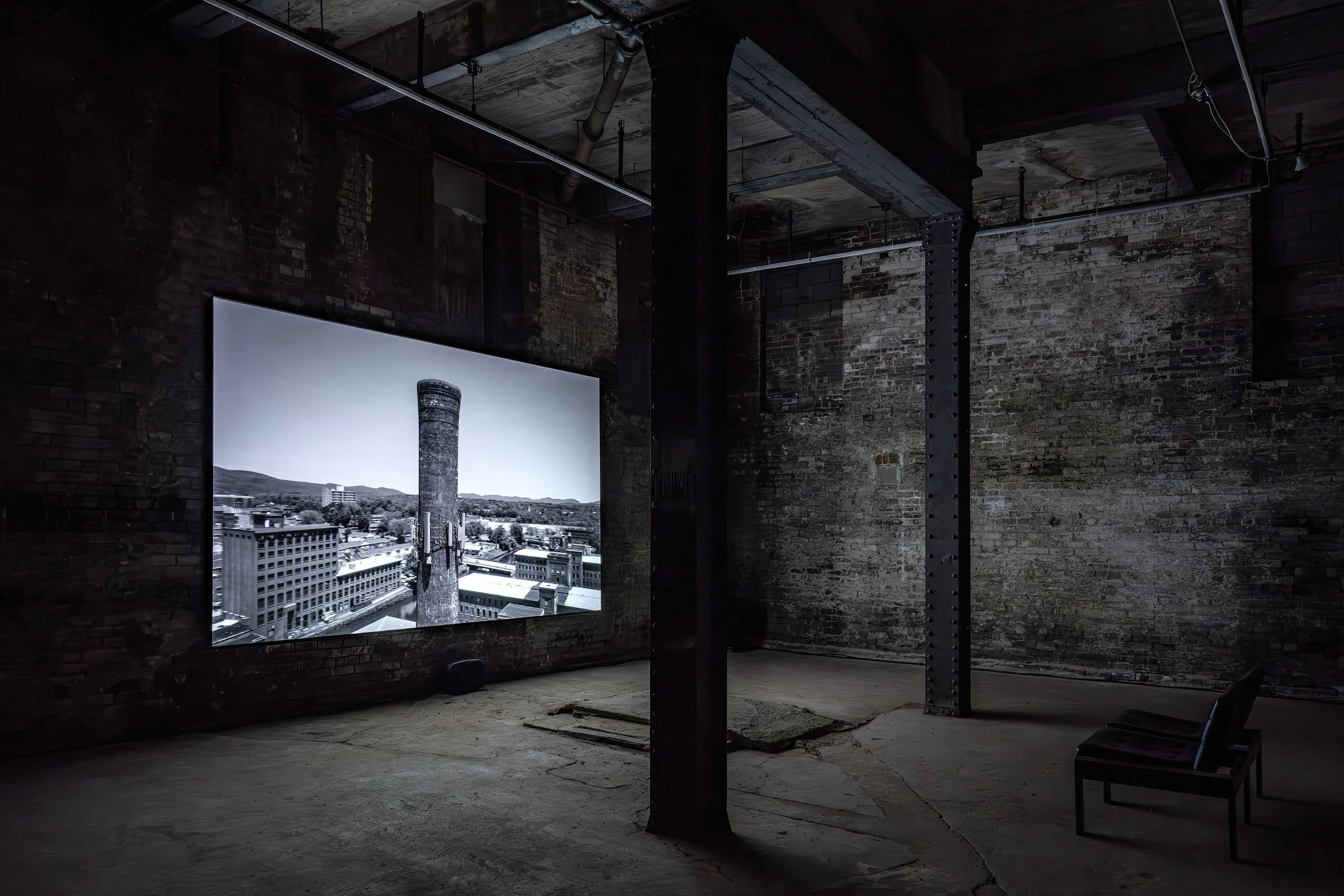
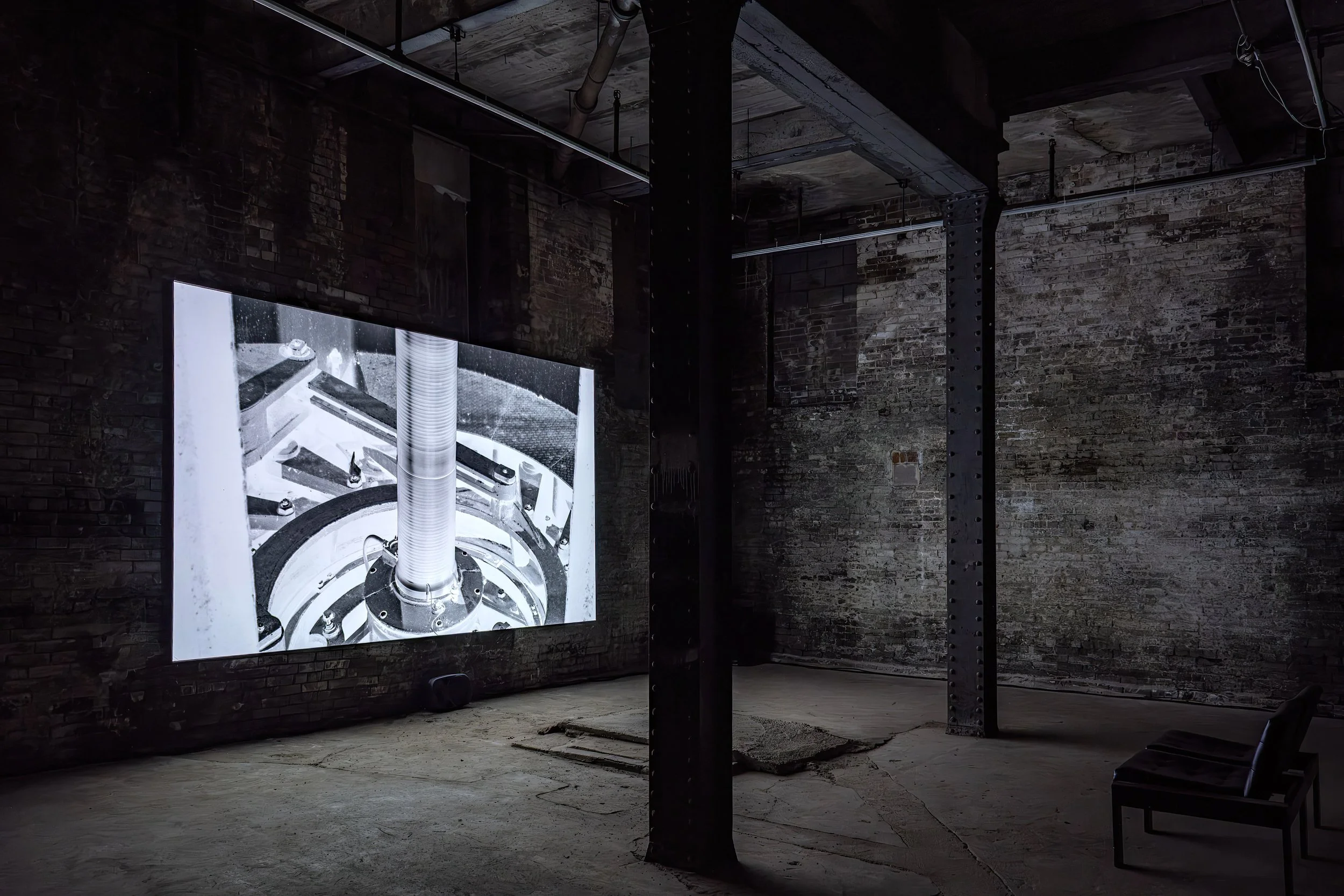
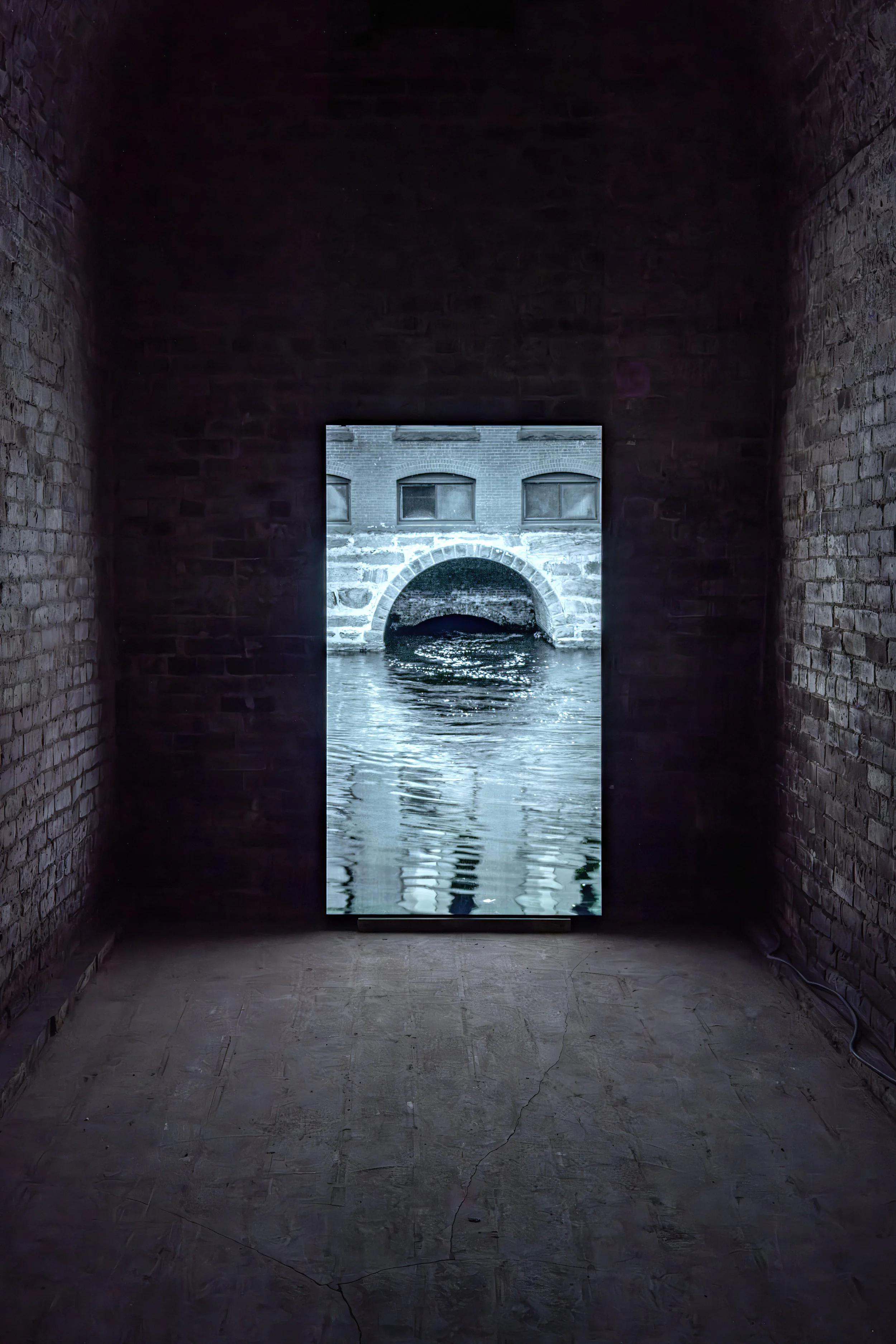
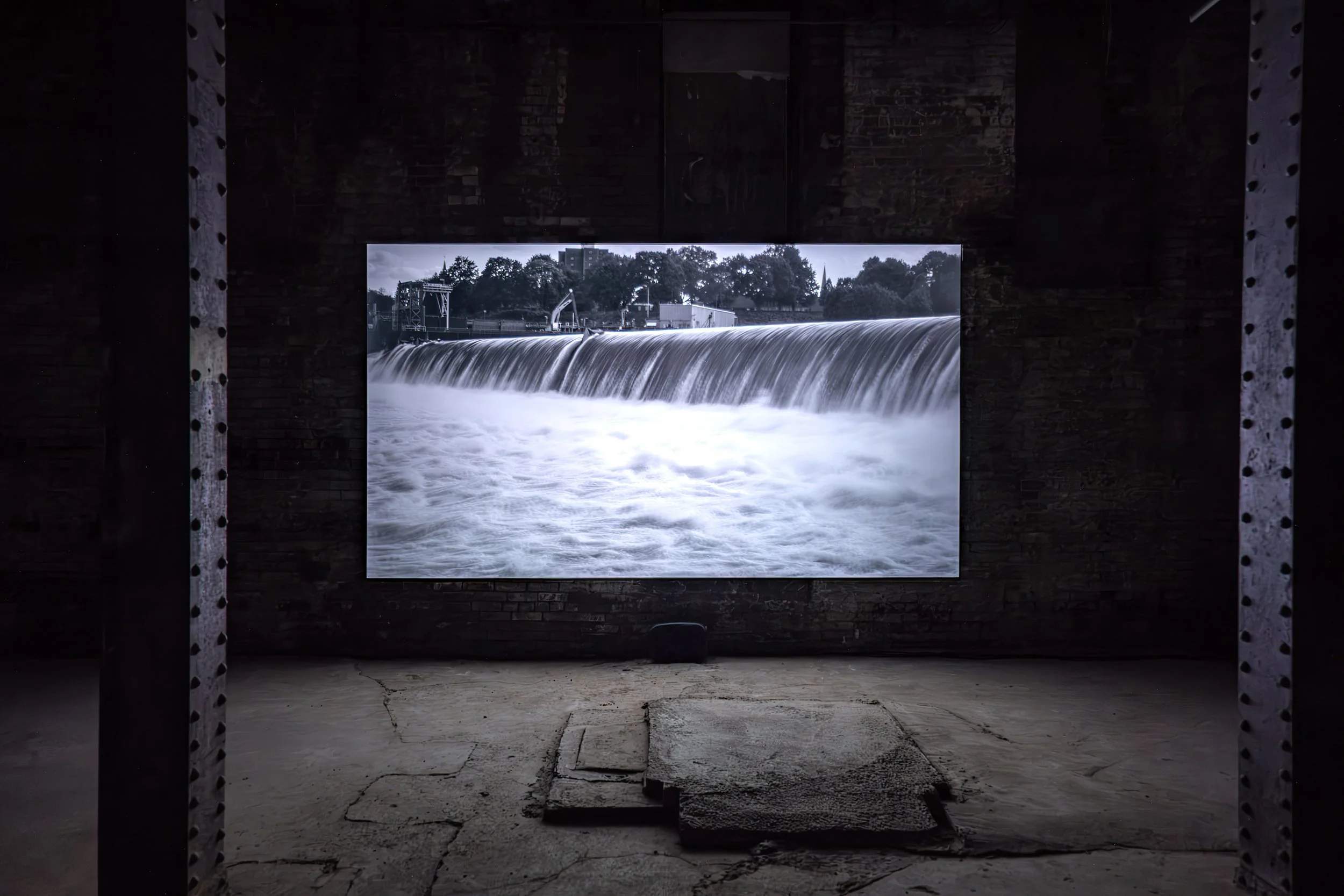
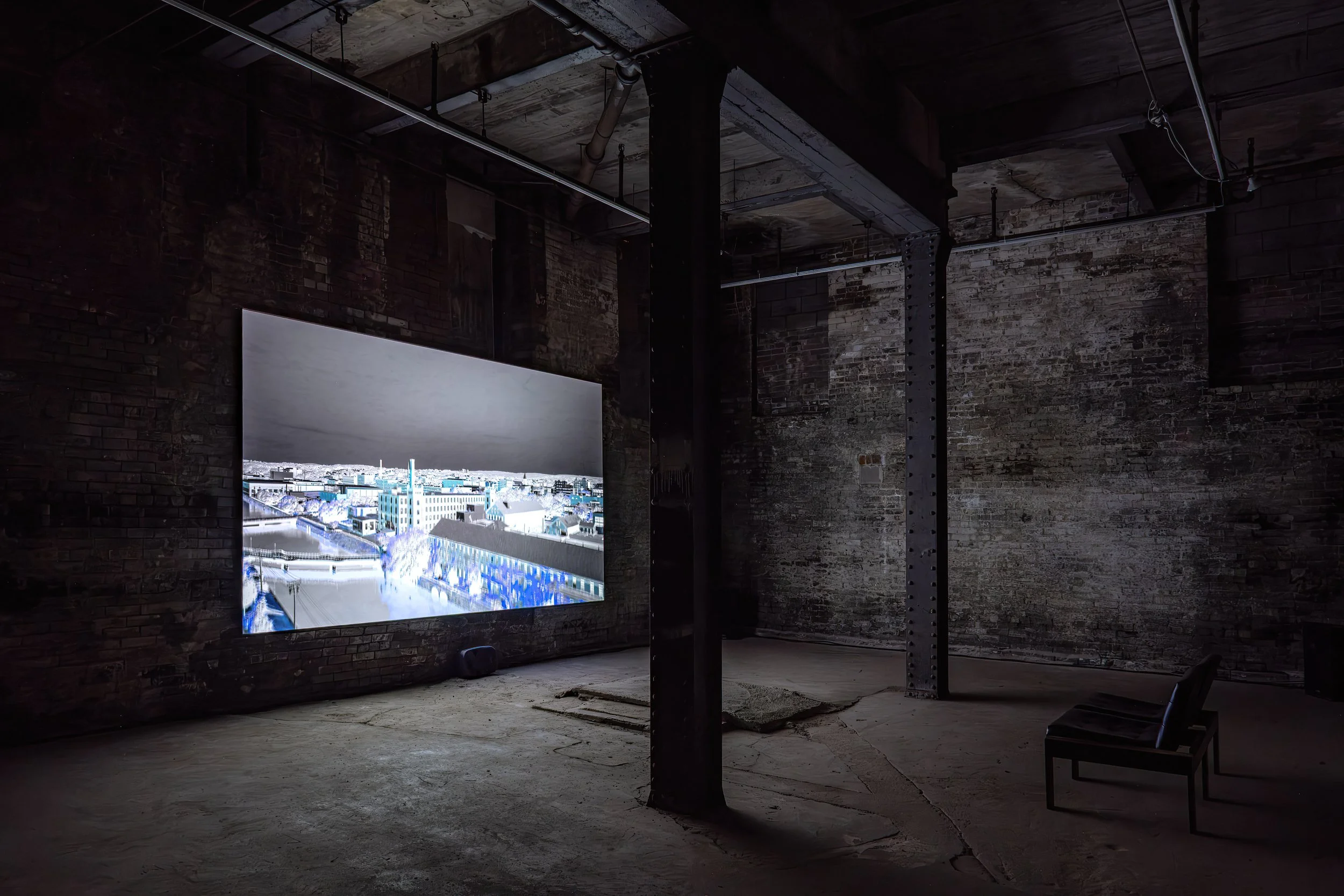
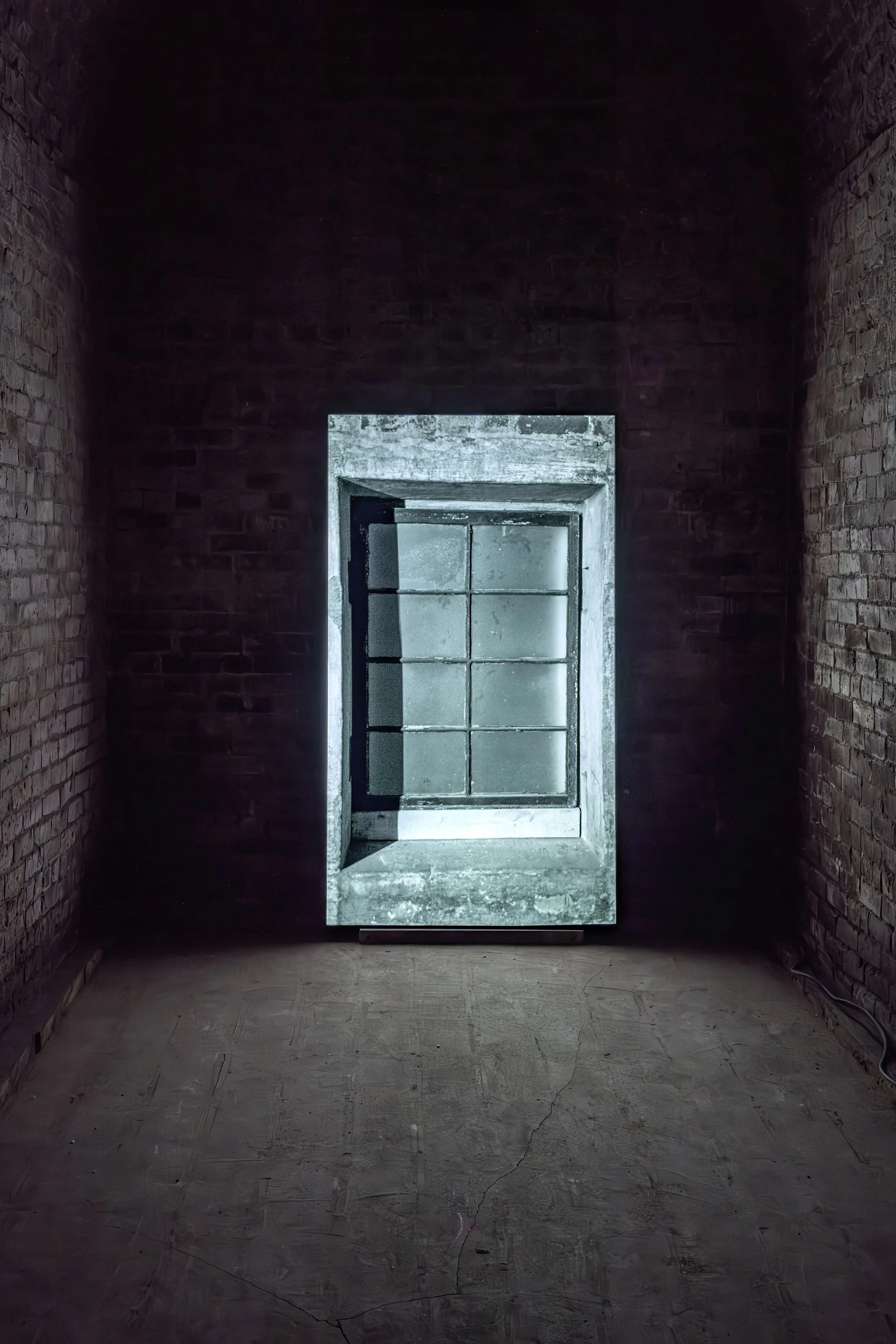
lower_cavity is very pleased to announce the presentation of John Menick’s Telharmonium, a project developed by Menick between 2024 and 2025 as part of his residency. The project will be on view by appointment from April 26 to May 31st, with an opening reception on April 26th from 4 pm – 7 pm.
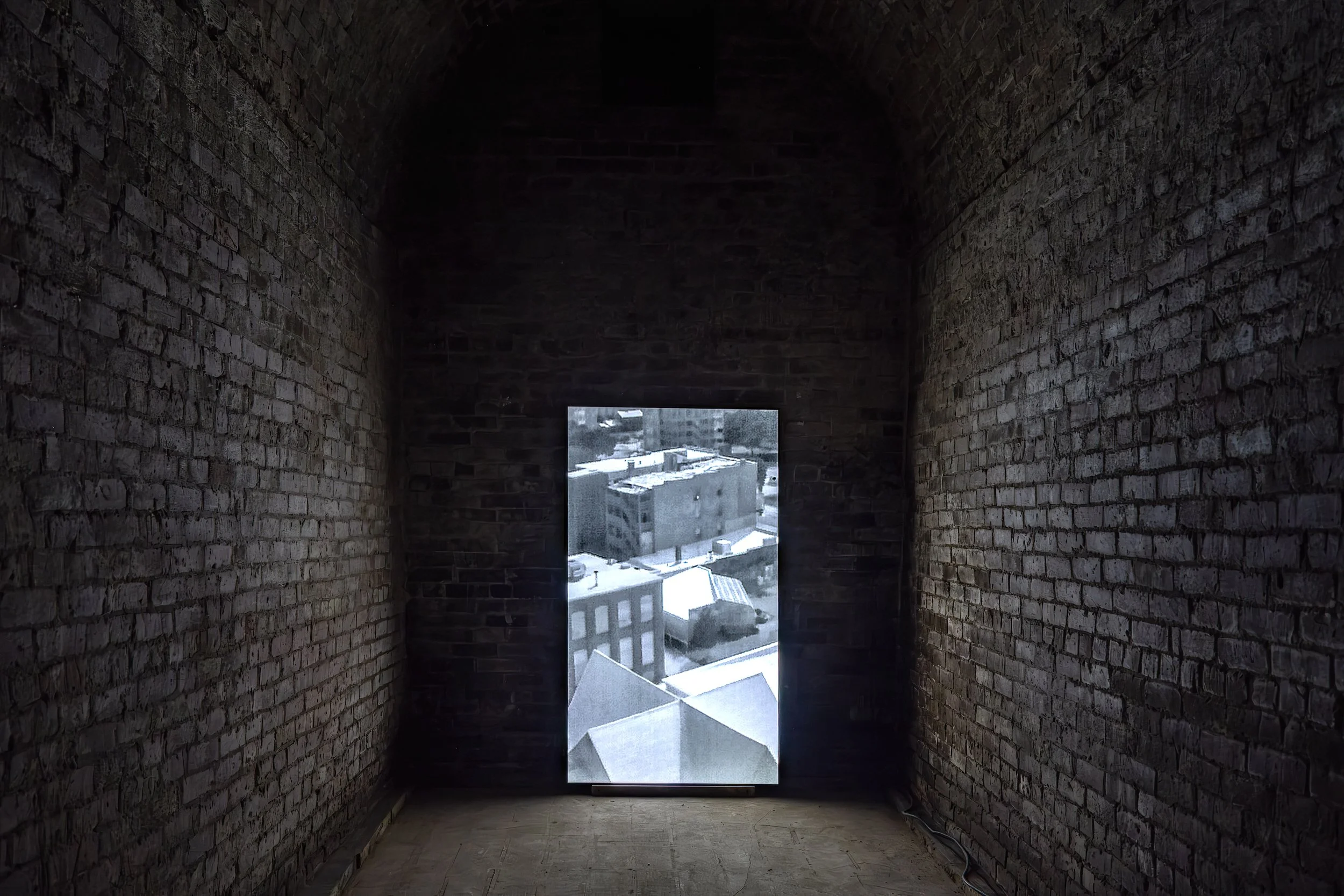
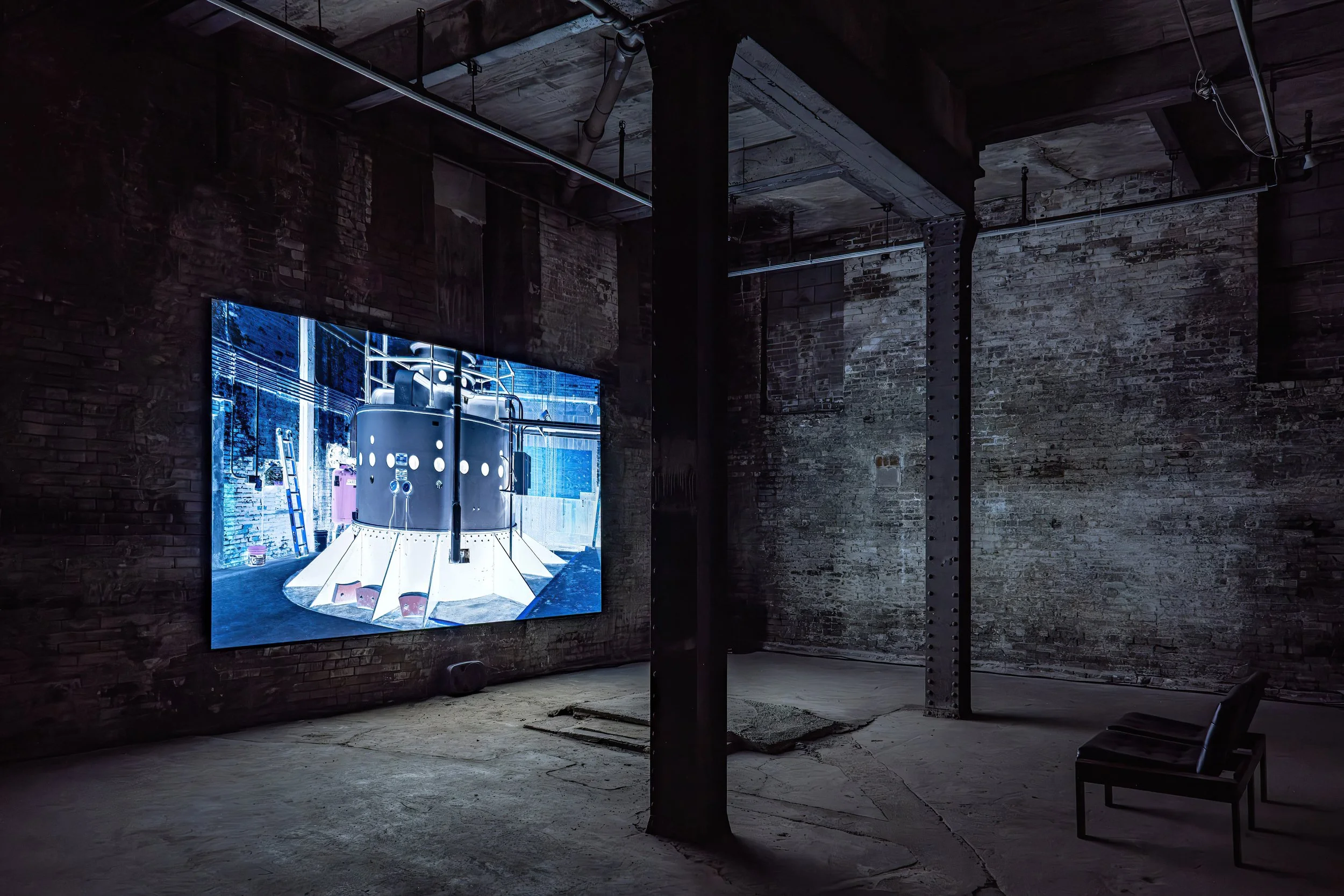
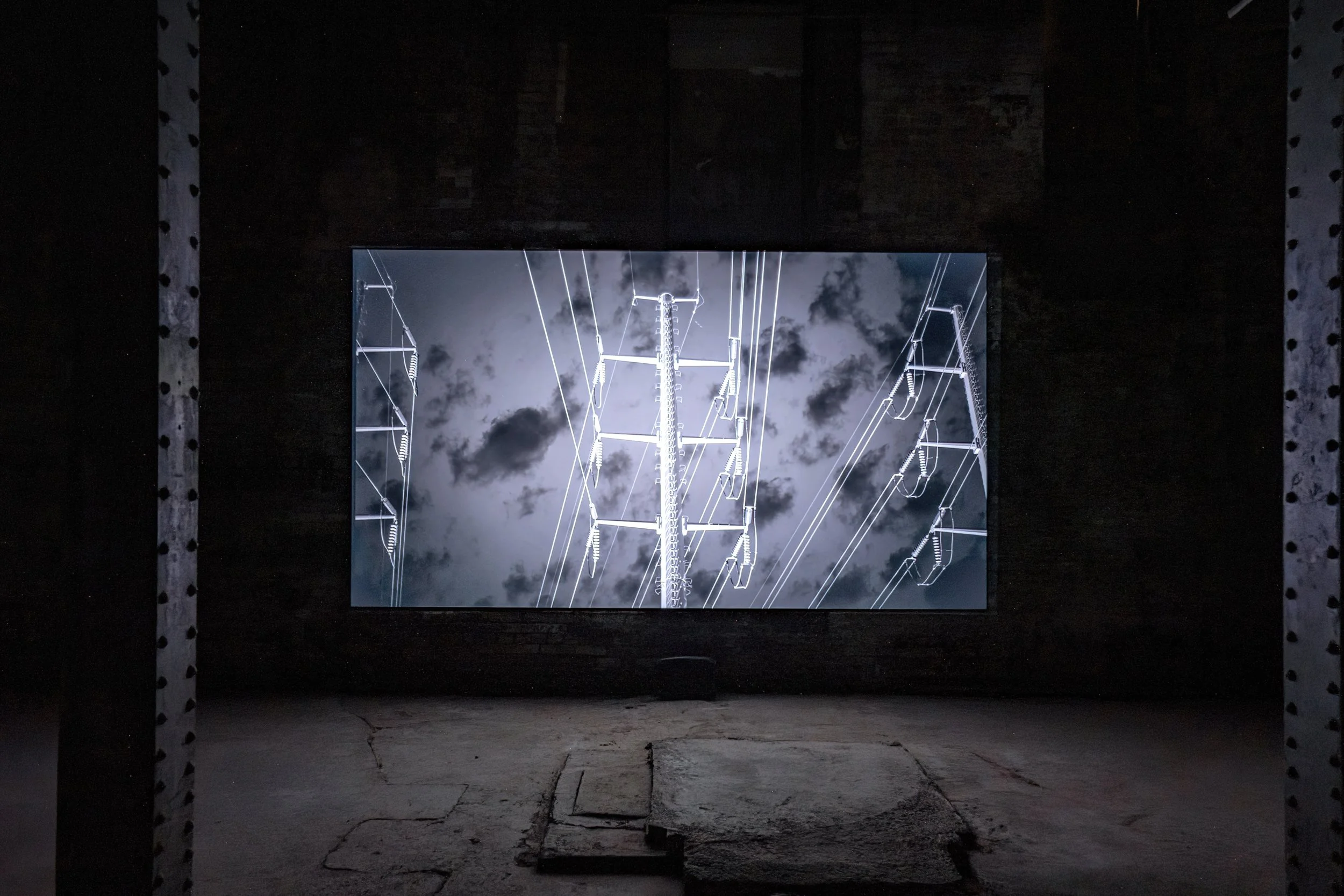
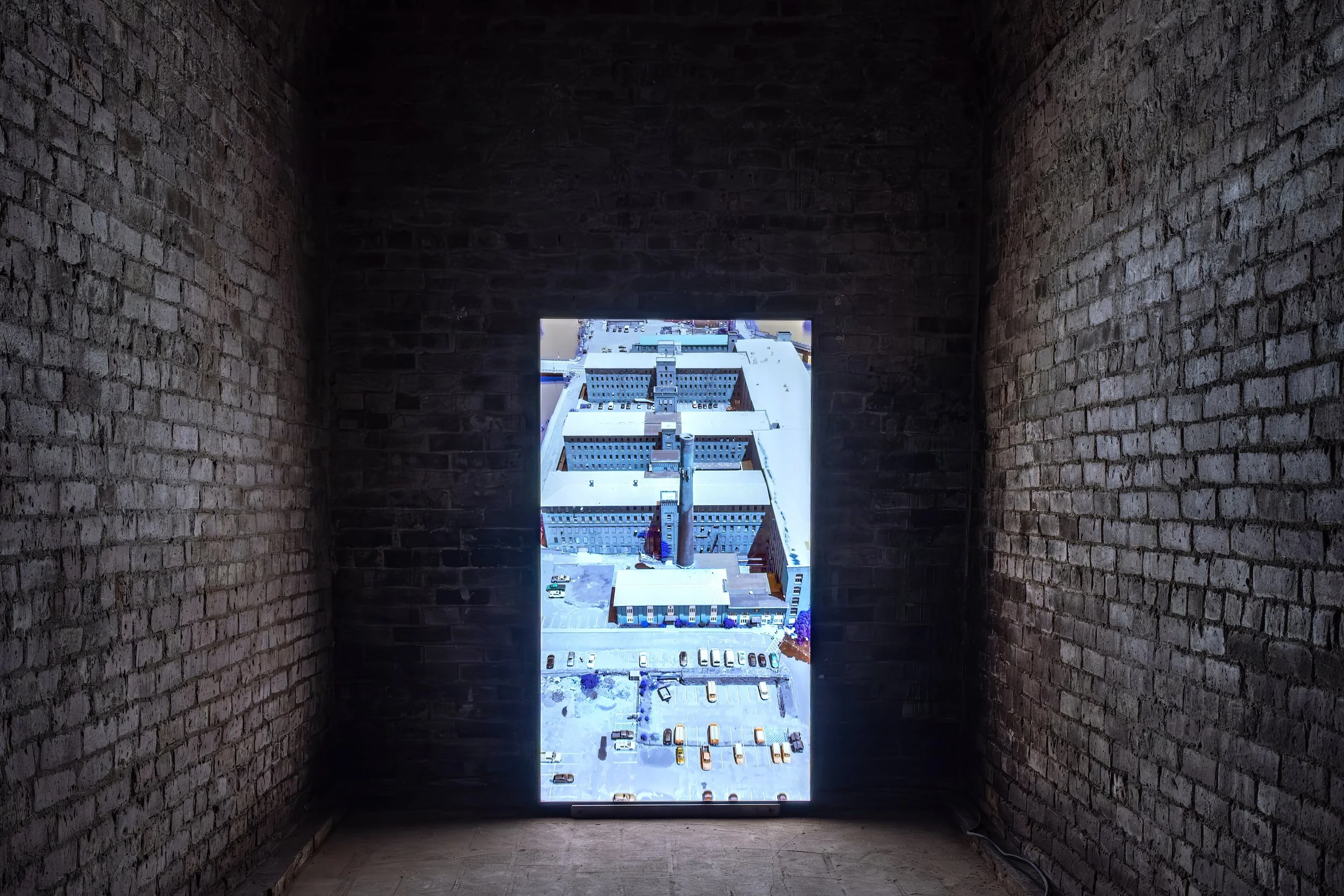
Filmed in and around Holyoke over a period of one year, Telharmonium is a generative film installation exploring the automation of culture through one of the earliest electronic instruments: the Telharmonium. The film links the history of technology with contemporary anxieties about artificial intelligence and the mechanization of creative labor. Telharmonium’s score was produced in collaboration with composer and artist Ben Shirken.
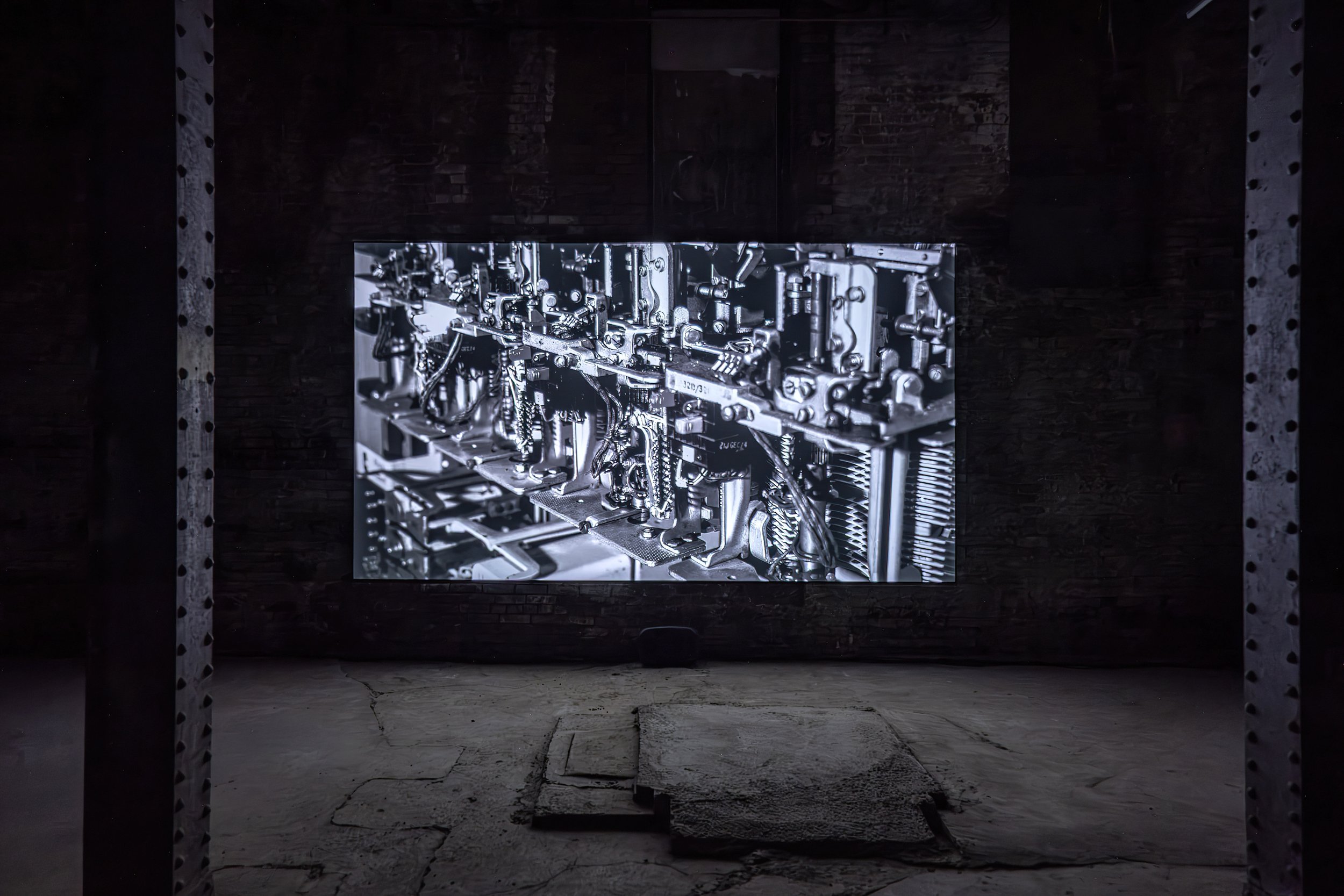
Menick’s work takes its title from what is often regarded to be the first synthesizer, the Telharmonium. Built in the 1900s by Thaddeus Cahill, the original Telharmonium was an organ-like musical instrument consisting of keyboards powered by electrical generators. The device weighed over two hundred tons and filled a New York basement. For the first time, a single electrical current could imitate the sounds of multiple instruments, including the violin, flute, and piano. Remarkably, the Telharmonium’s music was transmitted over the still-new telephone network. For a fee, restaurants, hotels, and private subscribers could listen to performances played blocks away in the “Telharmonic Hall.”
Through his research, Menick discovered that the first public version of the Telharmonium was built in Holyoke, only a few blocks from where the lower_cavity exhibition space is today. In the 1900s, when Cahill worked in the city, Holyoke was one of the more industrially advanced cities in America. Holyoke enjoyed an almost near-monopoly on American paper production. The city itself is a kind of machine made up of a system of enormous mills powered by canals and the nearby Connecticut River. Today, however, Holyoke is an example of post-industrial decline: it is one of the poorest cities in the state, with roughly 30 percent of the population living below the poverty line.
Like the player piano and phonograph, the Telharmonium was an early attempt to automate cultural labor. By centralizing musical creation, the work of a team of keyboardists could replace the live orchestras that once entertained fashionable restaurants. Later instruments, including the Moog synthesizer and the drum machine, carried the same promise: one performer could stand in for an ensemble, or a machine could dispense with musicians altogether. For Menick, these tensions echo today’s debates over AI and creative work. Just as the Telharmonium foreshadowed the replacement of live musicians, AI now imitates artistic styles with startling accuracy, raising fears that cultural production itself may be overtaken by Silicon Valley.
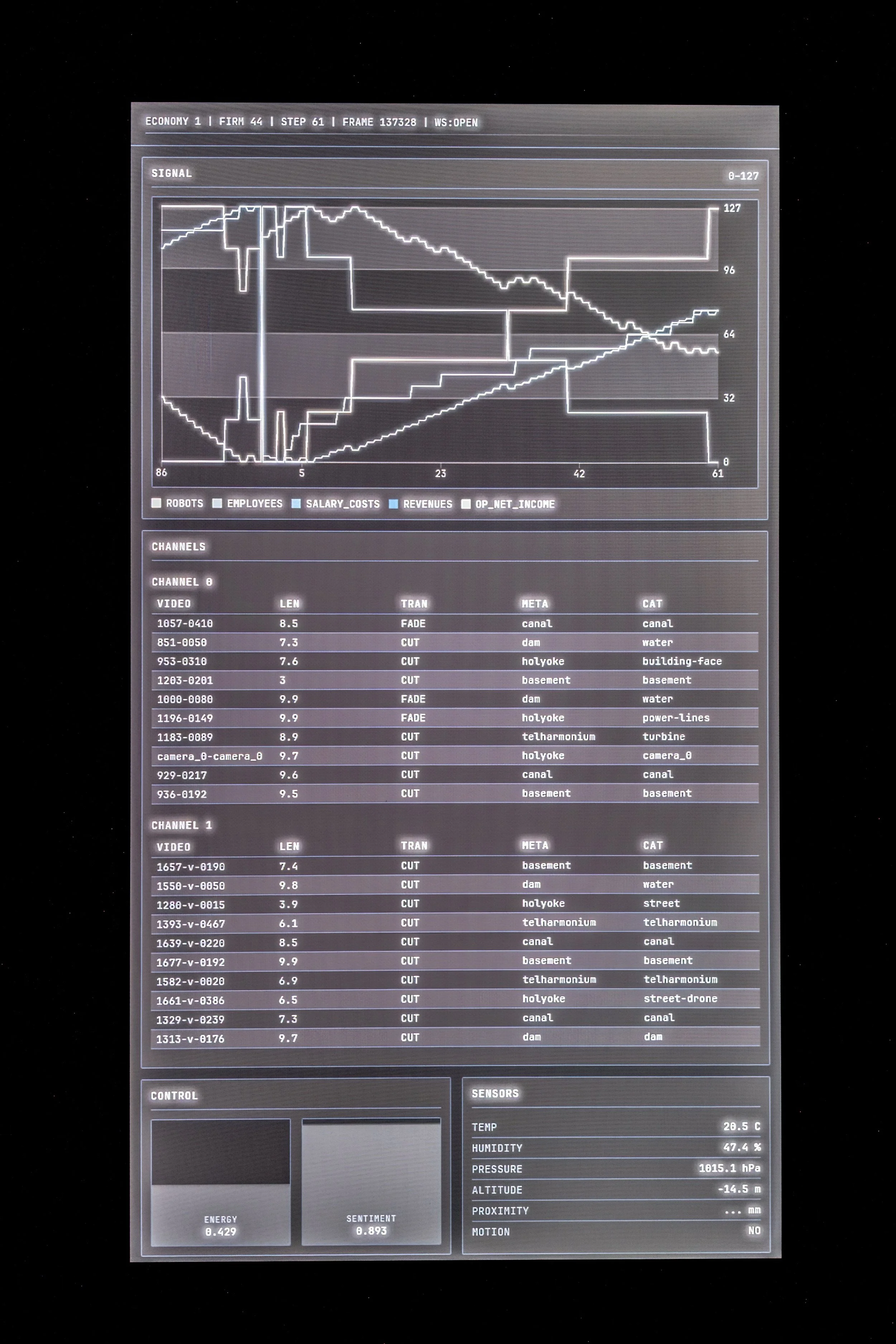
As with its subject, Menick’s film is conceived as a complex machine, algorithmically changing in real time. At its core, the film is controlled by a readymade computer simulation that models the effects of automation on a hypothetical economy. Menick wrote new software to route the simulator’s data to video editing and audio software. Menick’s software uses the economic data to control the film’s montage and sound, producing a work that is constantly changing and whose structure never repeats.
The film’s generative score was composed in collaboration with New York-based composer Ben Shirken. Shirken’s composition suggests industrial sound design more than a film score, having been composed from some of the same additive synthesis principles as the original Telharmonium.
Over the course of a year, Menick collected footage of Holyoke shot with thermal, infrared, drone, and night vision cameras, suggesting a machinic gaze over the city. Intermingled with this footage are computer renderings of speculative reconstructions of the Telharmonium, drawn from the few surviving photographs, and AI-generated depictions of telephone switch systems. The resulting montage, more machinic than cinematic, is assembled by Menick’s software from hundreds of shots. Over these images, a custom-made synthetic voice speaks in fragments about the Telharmonium, telephony, telepathy, and related topics.
For its presentation at lower_cavity, Telharmonium will operate as a kind of “lights out” factory, a term of industry used to describe fully automated robotic factories. Since robotic assembly lines do not need lit environments, these factories often function in darkness, working 24-7, monitored by reduced human crews. Likewise, the work will continue to function and display itself while visitors are absent in the exhibition. Night vision cameras will gather new footage of the space; the film’s economic simulator will continue to produce data; and sensors will measure changes to building’s environment. As this data is gathered and processed, the exhibition operates on its own programmed “circadian rhythm” created by the artist and unfolding over several weeks.
Telharmonium was produced by MATTA Gallery in Milan, with additional funding provided by KADIST. It premiered at the Artissima Fair in Torino in 2025 and is part of the collection of Castello di Rivoli. The artist would like to thank Matta Gallery, Anthony Discenza, and KADIST for their financial and creative support.
John Menick is a visual artist whose multidisciplinary work is made from fictional narratives, rules-based editing, and generative algorithms. His visual art has been exhibited at dOCUMENTA(13), MoMA/PS1, Palais de Tokyo, and CCA Wattis, while his films have screened at the International Film Festival Rotterdam and CPH:DOX, among other venues. Recent exhibitions, screenings, and performances include The World Through AI, Jeu de Paume; 2019, Grazer Kunstverein; and Edge of Life, Palazzo Grassi and Lo Schermo dell’arte. https://johnmenick.com/
Ben Shirken is a composer and artist whose work spans installation, sound, generative music, sculpture, and performance. Shirken is the founder of 29 Speedway, a New York-based record label and performance series. His work has been presented at Pioneer Works, Cannes Film Festival, International Film Festival Rotterdam, KAJE, the Brooklyn Academy of Music, New Museum, among other venues. https://benshirken.com/